

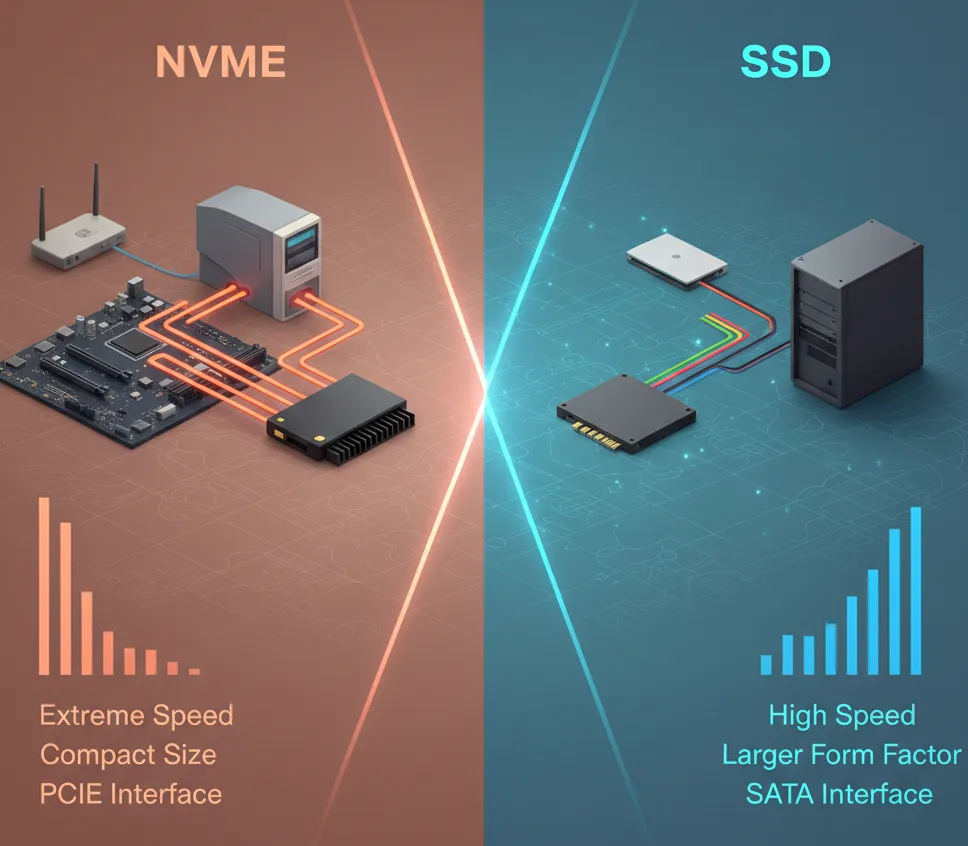
NVMe vs SSD
Understanding the Differences in Storage Technology
With the rise of high-speed computing, storage solutions have evolved significantly. Two of the most popular options today are SSDs (Solid State Drives) and NVMe drives (Non-Volatile Memory Express). While both improve performance compared to traditional HDDs, they differ in speed, interface, and use cases.
What is an SSD?
An SSD is a storage device that uses NAND-based flash memory to store data. It offers faster read and write speeds compared to mechanical hard drives, making it ideal for everyday computing and gaming. SSDs connect via SATA interfaces, which limits their maximum speed compared to NVMe drives.

What is NVMe?
NVMe is a protocol designed specifically for SSDs connected via the PCIe interface. By bypassing the traditional SATA interface, NVMe drives achieve significantly faster read/write speeds, lower latency, and improved performance in data-intensive tasks such as video editing, large file transfers, and gaming.

NVMe vs SSD: Key Differences
- Speed: NVMe drives are faster due to PCIe interface.
- Latency: NVMe has lower latency, better for heavy workloads.
- Price: SSDs are generally cheaper per GB than NVMe.
- Compatibility: NVMe requires a motherboard with M.2 PCIe slots.
Which Should You Choose?
If you’re looking for a fast, reliable upgrade for general use or gaming, a standard SSD is sufficient. For professionals handling large files, content creators, or tech enthusiasts seeking top speed, NVMe is the clear winner.